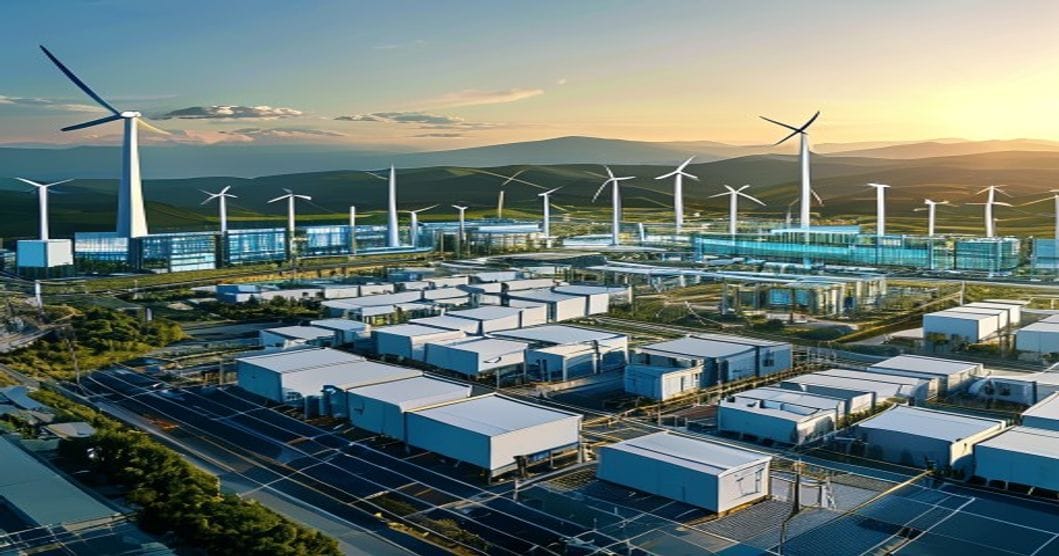
The convergence of artificial intelligence and energy infrastructure is reshaping America's power landscape in ways that directly impact the gaming industry's future. A staggering $100 billion investment in battery storage technology is fundamentally altering how the nation powers everything from massive data centers running cloud gaming services to the renewable energy grids supporting next-generation gaming hardware manufacturing.
This massive capital deployment represents more than just an energy transition—it's the foundation for gaming's most ambitious technological leap. As NVIDIA and AMD push the boundaries of AI-accelerated gaming experiences, the infrastructure supporting these advances requires unprecedented power stability and capacity. Battery storage systems are becoming the unsung heroes enabling consistent, high-performance gaming experiences across cloud platforms and local hardware alike.
The dual-purpose nature of these battery installations reveals the sophisticated planning behind America's energy evolution. While initially designed to complement renewable energy sources like wind and solar power, these storage systems are now critical for supporting the explosive growth of AI data centers that power everything from real-time ray tracing to machine learning-enhanced game development tools. Major gaming companies increasingly rely on these facilities to maintain the lightning-fast response times and computational power that modern gaming demands.
The financial scale of this transformation cannot be overstated. The $100 billion figure represents one of the largest infrastructure investments in American history, dwarfing previous technology sector buildouts. For gaming companies, this investment translates directly into more reliable and scalable infrastructure for cloud gaming services, reduced latency for competitive esports platforms, and enhanced capacity for processing the massive datasets required for AI-driven game development.
What makes this development particularly significant for the gaming industry is the timing. As virtual reality, augmented reality, and cloud gaming services mature, they're creating unprecedented demand for consistent, high-quality power delivery. Traditional grid infrastructure simply cannot handle the rapid power fluctuations and sustained high-capacity demands of modern gaming data centers. Battery storage systems provide the buffer and reliability these applications require, essentially future-proofing America's gaming infrastructure for the next decade of technological advancement.
The ripple effects extend beyond pure performance metrics. Enhanced energy storage capacity is enabling gaming companies to commit to more aggressive sustainability goals without sacrificing computational power. Microsoft, Sony, and other major players are leveraging these storage systems to run carbon-neutral operations while maintaining the energy-intensive processes required for cutting-edge game development and distribution.
The strategic implications for competitive gaming are equally profound. Esports tournaments and streaming platforms require absolute reliability in power delivery—a single outage during a major tournament can cost millions in revenue and damage long-term brand relationships. Battery storage systems provide the redundancy and rapid response capabilities that make large-scale competitive gaming events viable in an era of increasing power grid complexity and demand.
Looking ahead, this infrastructure investment positions American gaming companies to maintain their competitive edge in an increasingly global market. As international competitors invest heavily in their own gaming infrastructure, America's battery storage buildout ensures domestic companies retain advantages in latency, reliability, and scalability that directly translate to superior user experiences and operational efficiency.
The convergence of energy storage technology with gaming infrastructure represents more than just a technological upgrade—it's the foundation for the next generation of interactive entertainment. As investments continue to grow beyond initial projections, the gaming industry stands to benefit from increasingly sophisticated and reliable power systems that enable experiences previously limited by infrastructure constraints.
Written by the editorial team — independent journalism powered by Pressnow.
Sources: Electrek · May 20, 2026