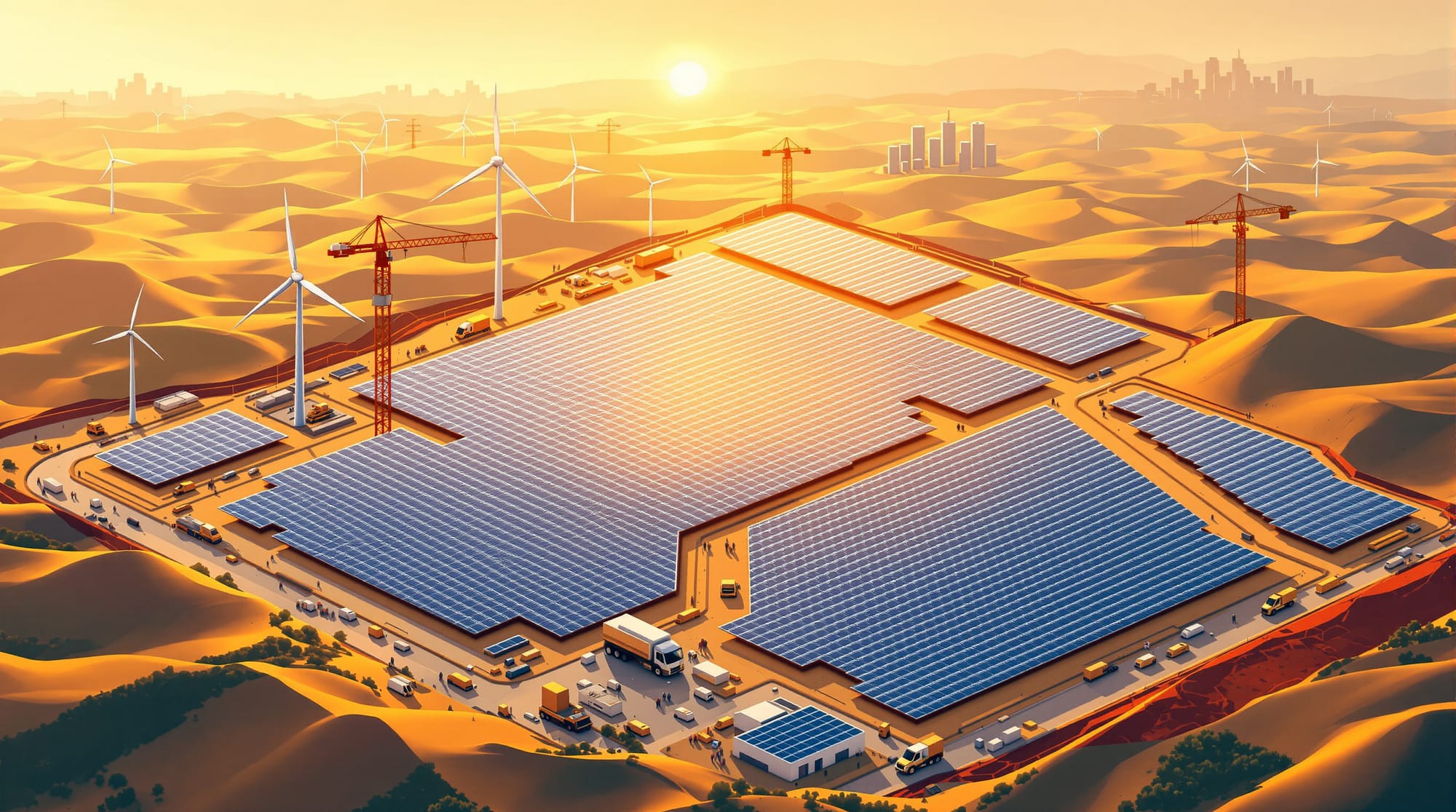
The American clean energy sector is experiencing a paradoxical moment of explosive growth driven by looming policy uncertainty. Clean energy developers announced more than 50 new utility-scale solar, wind, and battery storage projects during the first quarter of 2026, marking a dramatic surge in renewable energy development as companies race against federal deadline pressures.
This unprecedented wave of project announcements reflects the complex dynamics reshaping the energy landscape under evolving federal policies. The rush stems from a looming federal deadline connected to legislation passed during the previous Trump administration, creating what industry observers describe as a high-stakes sprint to secure project approvals and funding commitments before regulatory conditions potentially shift.
Policy-Driven Development Surge
The 50-plus projects spanning solar, wind, and battery storage represent one of the most concentrated periods of renewable energy development announcements in recent years. Developers are strategically positioning their initiatives to capitalize on existing federal frameworks while they remain accessible, demonstrating how policy timelines can dramatically accelerate industry decision-making.
This scramble highlights the delicate balance between long-term energy transition goals and short-term political realities. While the underlying economics of renewable energy continue improving, federal policy frameworks remain crucial for project financing and development timelines, particularly for utility-scale installations that require substantial upfront capital investments.
Strategic Positioning Amid Uncertainty
The timing of these announcements reveals sophisticated strategic thinking by energy developers who must navigate both technical and political landscapes. Battery storage projects, in particular, represent a growing recognition that grid-scale energy storage is essential for renewable energy integration, regardless of policy frameworks.
Solar and wind projects continue dominating the development pipeline, reflecting their established market position and declining costs. However, the compressed timeline for project initiation suggests developers are prioritizing speed over optimization, potentially leading to suboptimal site selection or financing arrangements in some cases.
Market Implications and Grid Integration
The surge in project announcements creates significant implications for grid operators and regional energy markets. Utility-scale renewable installations require substantial transmission infrastructure investments and grid integration planning, particularly when deployed at this accelerated pace across multiple regions simultaneously.
Battery storage projects within this development wave address one of the most persistent challenges in renewable energy deployment: the intermittency problem. These installations enable better grid stability and energy arbitrage opportunities, making renewable sources more viable for baseload power applications.
Investment and Economic Dynamics
The compressed development timeline is reshaping investment patterns in the clean energy sector. Project developers must secure financing commitments more rapidly than typical development cycles allow, potentially leading to higher capital costs or more conservative project designs. This dynamic particularly affects smaller developers who may lack the balance sheet strength to weather extended development processes.
Regional economic impacts from this development surge extend beyond direct construction employment. Manufacturing supply chains for solar panels, wind turbines, and battery systems face increased demand pressure, while local communities hosting these installations benefit from property tax revenues and infrastructure investments.
The simultaneous boom and uncertainty surrounding these developments reflects broader tensions in American energy policy. While clean energy technologies have achieved cost competitiveness in many markets, federal policy frameworks continue influencing deployment rates and geographic distribution of new installations. This dynamic creates both opportunities for aggressive expansion and risks associated with policy-dependent business models.
For the energy industry, this moment represents a critical stress test of how quickly large-scale infrastructure can be developed when market forces and policy incentives align. The success or failure of these 50-plus projects will likely influence future policy design and industry development strategies for years to come, making Q1 2026 a defining period for American renewable energy deployment.
Written by the editorial team — independent journalism powered by Pressnow.
Sources: Electrek · May 28, 2026