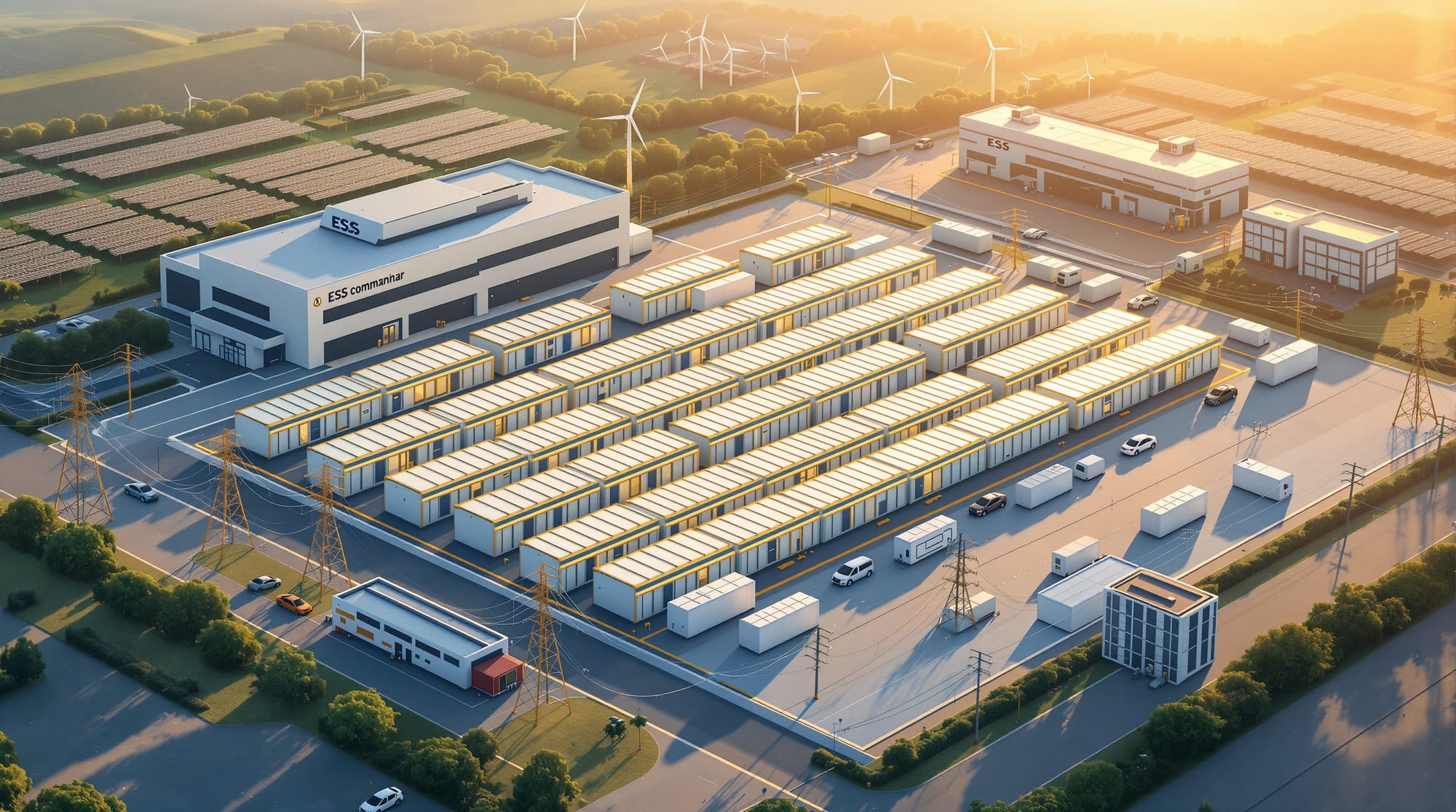
The energy storage industry is witnessing a fascinating strategic pivot as ESS Inc. announces an ambitious 8.5 gigawatt-hour expansion using sodium-ion battery technology. This move represents more than just capacity growth—it signals a fundamental shift in how the company plans to compete in an increasingly crowded marketplace where lithium-ion has long reigned supreme.
ESS has built its reputation on long-duration energy storage solutions, carving out a specialized niche in a market dominated by shorter-duration applications. But the company's latest expansion into short- and medium-duration battery storage markets with 8.5 GWh of sodium-ion capacity suggests a bold bet on alternative battery chemistry at a time when most competitors are doubling down on lithium-based solutions.
The choice of sodium-ion technology over lithium represents a calculated risk that could reshape competitive dynamics in the battery storage sector. While lithium-ion batteries have dominated the market due to their energy density and declining costs, sodium-ion offers compelling advantages including abundant raw materials, improved safety characteristics, and potentially lower long-term costs. For ESS, this technology choice allows the company to differentiate itself in markets where pure performance metrics may not be the only consideration.
The timing of this expansion is particularly noteworthy given the current state of the energy storage market. Short- and medium-duration applications have become increasingly competitive as utilities and grid operators seek flexible solutions for managing renewable energy integration and grid stability. By entering these markets with 8.5 GWh of capacity, ESS is positioning itself to capture a significant share of this growing demand while avoiding direct competition on lithium supply chains that have experienced volatility and pricing pressures.
From a strategic perspective, ESS's move reflects broader industry trends toward technology diversification and supply chain resilience. The company's willingness to move beyond its long-duration energy storage roots demonstrates adaptability in a rapidly evolving market where customer needs are becoming more sophisticated. The 8.5 GWh capacity addition represents substantial growth that could significantly impact the company's market position and revenue potential.
The implications extend beyond ESS itself to the broader energy storage ecosystem. If sodium-ion technology proves successful in these applications, it could accelerate adoption across the industry and create new competitive pressures for traditional lithium-ion providers. The success or failure of this expansion will likely influence other companies' technology decisions and investment strategies in the coming years.
For grid operators and utilities, ESS's sodium-ion approach offers an alternative pathway for meeting storage requirements without contributing to lithium demand pressures. This could prove particularly valuable as electrification accelerates across transportation and other sectors, potentially creating supply constraints for lithium-based technologies. The 8.5 GWh of new capacity provides meaningful scale for demonstrating sodium-ion viability in real-world grid applications.
The broader energy transition context makes ESS's strategic shift even more significant. As renewable energy penetration increases globally, the demand for flexible, cost-effective storage solutions continues to grow across multiple duration categories. By diversifying its technology portfolio and expanding into new market segments, ESS is positioning itself to benefit from this growth while reducing dependence on any single application or technology approach.
Written by the editorial team — independent journalism powered by Pressnow.
Sources: Electrek · May 6, 2026