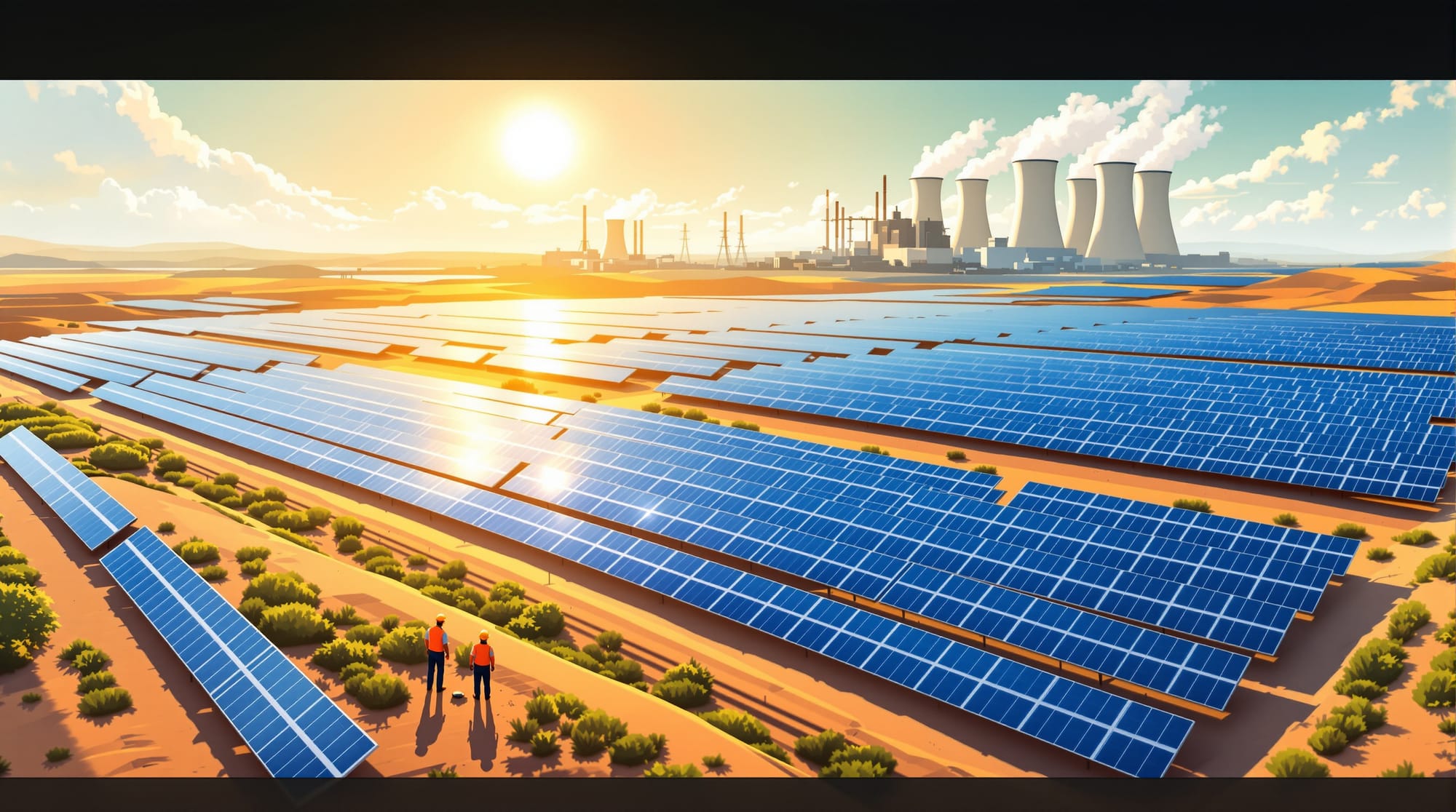
The energy revolution that climate advocates have long promised is no longer a distant aspiration—it's happening right now, and it's happening faster than most industry observers anticipated. A comprehensive new analysis from climate and energy think tank Ember reveals that natural gas, once heralded as the "bridge fuel" to a cleaner energy future, is rapidly losing ground to solar power across the globe in a shift that's fundamentally rewriting the economics of electricity generation.
The numbers paint a stark picture of transformation. According to Ember's analysis, 61 out of 124 economies that generate electricity from gas have already passed their peak gas power generation. This isn't happening in energy backwaters or developing nations with limited infrastructure—four G7 countries are leading the charge away from gas dependency. The United Kingdom, Germany, Italy, and Japan, representing some of the world's most sophisticated energy markets, have all crossed the threshold where their gas-fired electricity generation has peaked and begun its inevitable decline.
What makes this transition particularly remarkable is the speed at which it's occurring. Just a decade ago, natural gas was positioned as the clean alternative to coal, offering lower emissions and greater flexibility than traditional fossil fuels. Energy planners worldwide built strategies around gas as a transitional technology that would bridge the gap between dirty coal plants and an eventual renewable future. That future, it turns out, arrived much sooner than anyone expected, and it's powered predominantly by solar technology whose costs have plummeted far beyond the most optimistic projections.
The Economics Behind the Energy Exodus
The driving force behind this global shift isn't environmental ideology—it's cold, hard economics. Countries are increasingly turning to what Ember characterizes as "cheaper, more secure renewable energy," a description that captures the dual appeal of solar power in an era of volatile fossil fuel markets. Solar installations require no fuel imports, no commodity price hedging, and minimal ongoing operational costs once the panels are installed and connected to the grid.
This economic reality has created a cascading effect across energy markets. As solar capacity expands and costs continue to fall, gas plants find themselves increasingly relegated to backup roles, operating fewer hours per year and generating less revenue. The fixed costs of maintaining gas infrastructure become harder to justify when the plants run intermittently, creating a vicious cycle that accelerates the transition to renewables.
The geopolitical implications are equally significant. Energy security, once dependent on complex international supply chains and vulnerable maritime shipping routes, increasingly means domestic solar installations and wind farms. Countries that have traditionally been energy importers are discovering they can become energy independent through renewable buildouts, fundamentally altering global power dynamics and reducing exposure to the price volatility that has characterized fossil fuel markets.
Industry Implications and Market Transformation
For the energy industry, these findings represent both opportunity and existential threat. Traditional utilities built around large, centralized gas plants face the challenge of adapting business models designed for a different era. Meanwhile, solar developers, energy storage companies, and grid modernization specialists find themselves at the center of the largest infrastructure transformation in modern history.
The transition is also reshaping labor markets and industrial strategies. Countries with strong solar manufacturing capabilities are positioning themselves as the new energy exporters, selling technology rather than commodities. The shift represents a fundamental change in how nations think about energy independence and economic competitiveness in the global marketplace.
Perhaps most significantly, the speed of this transition suggests that climate goals once considered ambitious may actually be conservative. If 61 economies have already passed peak gas generation while renewable alternatives continue to become more cost-effective, the trajectory toward a post-fossil fuel energy system appears to be accelerating beyond even the most optimistic projections from climate policy advocates.
The Ember analysis underscores a crucial reality that policymakers and industry leaders can no longer ignore: the energy transition isn't coming—it's here. The question now isn't whether renewable energy will dominate global electricity generation, but how quickly traditional energy companies can adapt to a world where solar power has become the default choice for new capacity additions. For countries still heavily dependent on gas generation, the window for managed transition strategies is narrowing rapidly as economic forces drive an increasingly swift shift toward renewable alternatives.
Written by the editorial team — independent journalism powered by Pressnow.
Sources: Electrek · June 8, 2026