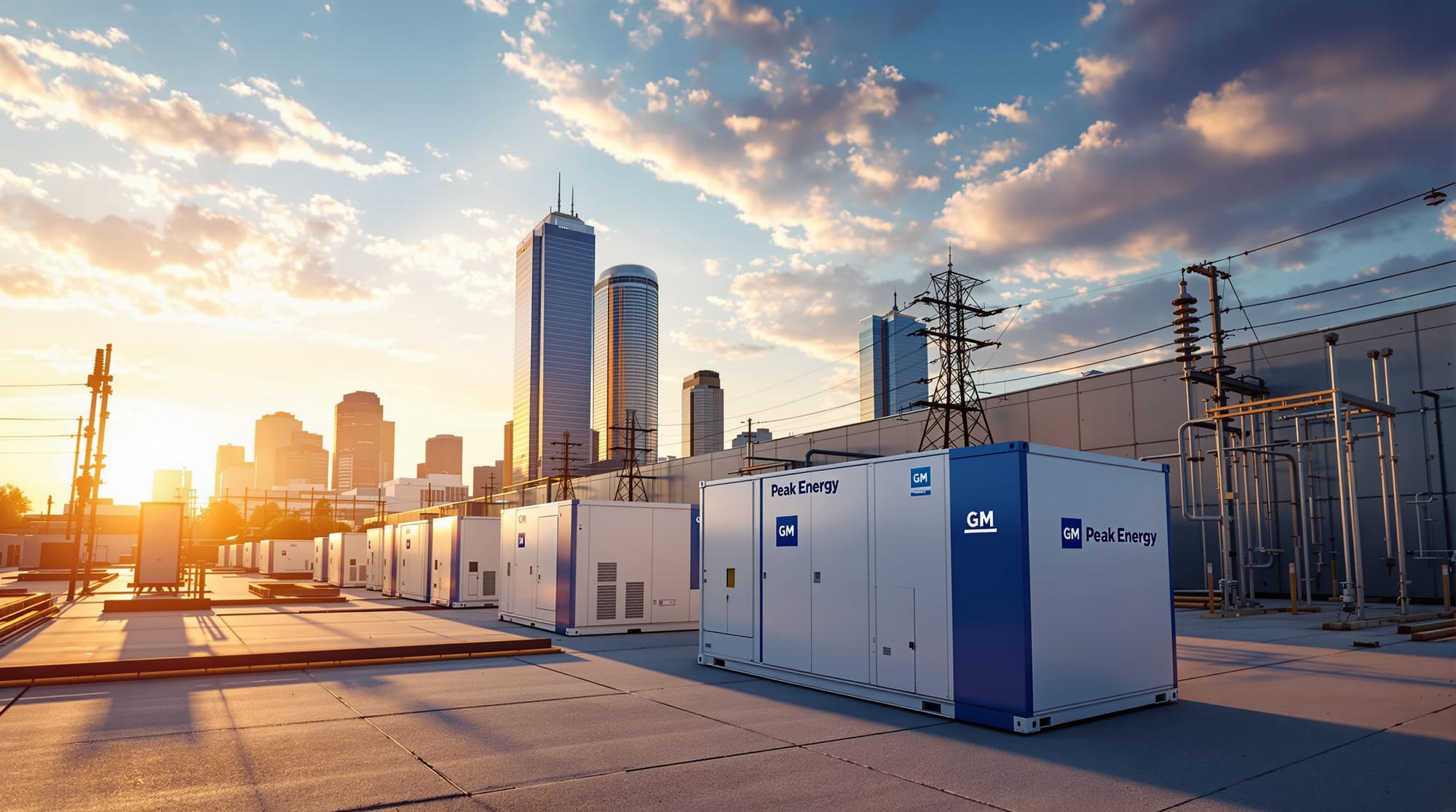
The automotive industry's push beyond traditional vehicle manufacturing has taken another significant turn as General Motors ventures into grid-scale energy storage through a strategic partnership with battery technology company Peak Energy. This collaboration centers on developing sodium-ion battery cells that deliberately avoid lithium, positioning GM to capitalize on the rapidly expanding stationary energy storage market while diversifying its technology portfolio beyond electric vehicles.
The partnership represents a calculated bet on sodium-ion chemistry, which offers compelling advantages for grid-scale applications despite being less energy-dense than the lithium-ion batteries that dominate electric vehicle powertrains. GM Ventures, the automaker's investment arm, is making a strategic investment in Peak Energy to accelerate development of these next-generation battery cells specifically engineered for stationary storage applications rather than automotive use.
The Strategic Shift to Stationary Storage
GM's decision to target grid-scale energy storage reflects the explosive growth in this sector as utilities and independent power producers seek massive battery installations to balance renewable energy intermittency. Unlike electric vehicle batteries that must prioritize energy density and weight considerations, grid storage applications can leverage sodium-ion's inherent advantages: lower material costs, improved safety characteristics, and better performance in extreme temperatures. The absence of lithium also insulates these batteries from the supply chain volatility and price fluctuations that have plagued the EV industry.
This partnership signals GM's recognition that automotive expertise in battery manufacturing and thermal management translates effectively to stationary applications. The company's extensive experience with battery pack assembly, cooling systems, and power electronics from its Ultium platform development provides valuable foundation for grid-scale projects. Peak Energy brings specialized sodium-ion chemistry knowledge that complements GM's manufacturing capabilities and automotive-grade quality control processes.
Sodium-Ion's Grid Storage Advantages
The technical merits of sodium-ion chemistry for grid applications extend beyond cost considerations. These batteries can operate effectively across wider temperature ranges without the thermal management complexity required for lithium-ion systems, reducing both installation and operational costs for utility-scale deployments. The technology also eliminates concerns about lithium supply chains increasingly dominated by geopolitically sensitive regions, offering greater material security for long-term energy infrastructure investments.
Grid storage applications can accommodate sodium-ion's lower energy density because space constraints matter less than in automotive applications. Utility-scale installations prioritize total system cost per kilowatt-hour stored rather than volumetric efficiency, making sodium-ion's cost advantages particularly attractive for long-duration storage projects that require many hours of discharge capability.
Market Timing and Competition
The timing of GM's entry into grid storage coincides with unprecedented demand for utility-scale battery installations driven by renewable energy expansion and grid modernization requirements. Major utilities are procuring gigawatt-hours of storage capacity annually, creating substantial market opportunities for companies that can deliver reliable, cost-effective solutions at scale. GM's manufacturing expertise and quality systems could provide competitive advantages in a market where execution and reliability are paramount.
However, the company faces established competition from dedicated energy storage providers and battery manufacturers already developing sodium-ion technologies. Chinese companies have made significant sodium-ion advances, while other automotive manufacturers are exploring similar diversification strategies. GM's success will depend on Peak Energy's technological differentiation and the companies' ability to scale production efficiently while maintaining the quality standards expected in utility applications.
This partnership represents more than technology development—it signals GM's evolution from automotive manufacturer to broader energy company. As electric vehicle adoption accelerates and charging infrastructure expands, the intersection between transportation and grid storage becomes increasingly strategic. Companies that can navigate both domains may capture significant value as the energy transition accelerates and grid modernization demands sophisticated storage solutions at unprecedented scale.
Written by the editorial team — independent journalism powered by Pressnow.
Sources: Electrek · June 10, 2026