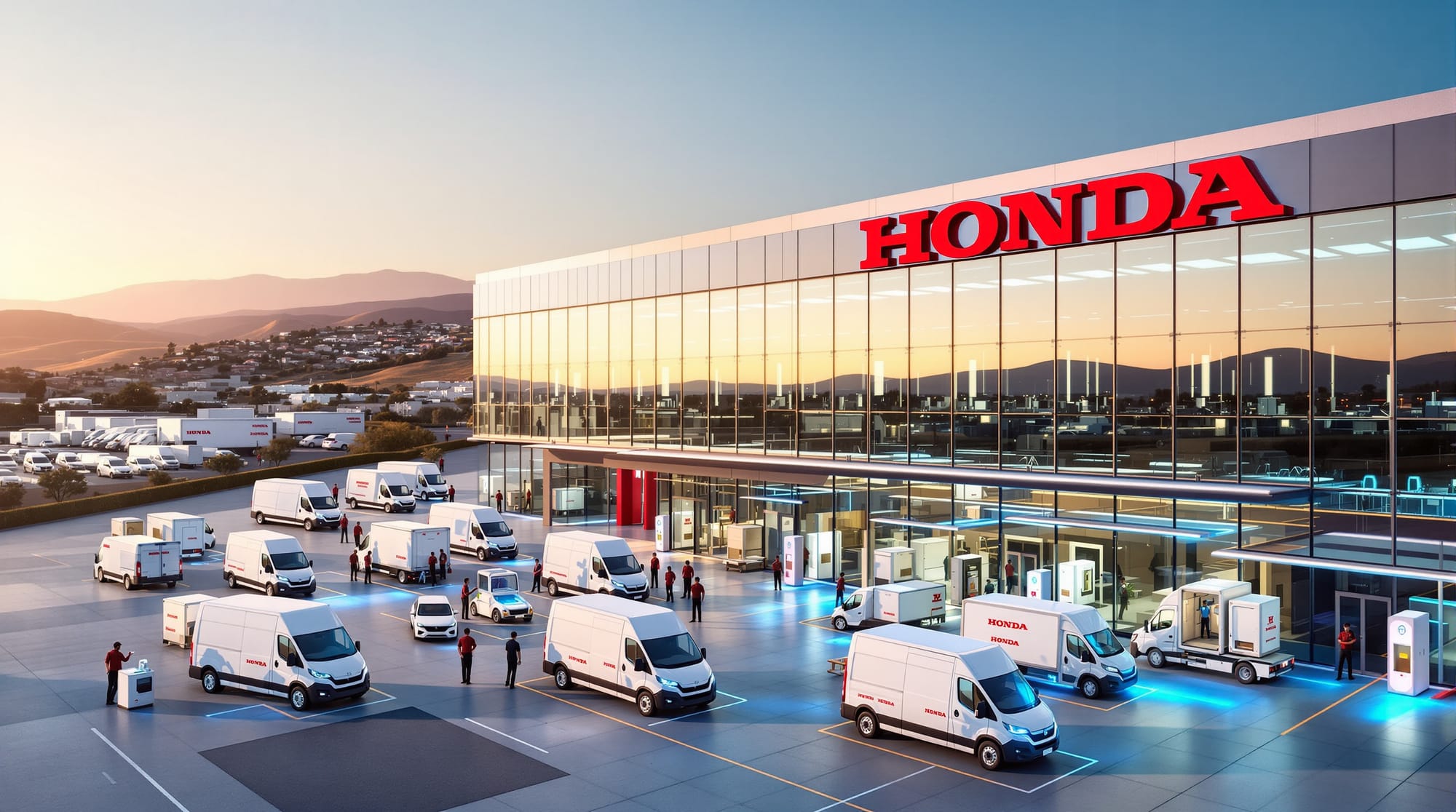
The electric mobility landscape is about to witness a significant shift as Honda prepares to introduce its Mobile Power Pack e: swappable battery technology to the United States market. The Japanese automotive giant revealed its ambitious timeline at last week's ACT Expo, targeting a June 2026 launch specifically focused on business-to-business commercial integrations.
This strategic move represents Honda's calculated entry into the rapidly evolving battery swap ecosystem, positioning the company to challenge established players in the commercial electric vehicle space. Rather than pursuing the consumer market where Tesla's Supercharger network dominates mindshare, Honda is betting on the untapped potential of commercial fleet operations where downtime directly translates to lost revenue.
The Mobile Power Pack e: system addresses one of the most persistent challenges facing commercial electric vehicle adoption: charging infrastructure limitations and the operational disruption caused by lengthy charging sessions. Traditional fast-charging solutions, while improving, still require 30-60 minutes for meaningful range recovery. Honda's swappable battery approach promises to reduce this operational interruption to mere minutes, fundamentally altering the economics of electric commercial vehicles.
Commercial Fleet Focus Signals Market Maturity
Honda's decision to prioritize B2B applications over consumer adoption reflects a sophisticated understanding of market dynamics and operational requirements. Commercial fleet operators evaluate vehicles through the lens of total cost of ownership, operational efficiency, and revenue generation potential. These factors create a more receptive environment for innovative technologies that can demonstrate clear return on investment, even if initial implementation costs are higher.
The timing of Honda's June 2026 target date positions the company to capitalize on several converging market trends. Federal and state regulations increasingly mandate emissions reductions for commercial vehicles, while fuel costs continue to create budget pressure for fleet operators. Additionally, the infrastructure investment from recent federal legislation provides financial incentives for companies willing to pioneer advanced electric vehicle technologies.
Battery swap technology has gained renewed attention in recent years, particularly in Asia where companies like NIO have successfully implemented consumer-focused systems. However, the commercial vehicle segment presents unique advantages for this approach. Fleet vehicles typically operate on predictable routes with centralized maintenance facilities, creating natural locations for battery swap stations. The standardization requirements that challenged consumer battery swap adoption become manageable when dealing with specific fleet partnerships.
Infrastructure Investment and Partnership Strategy
Honda's success in the US market will largely depend on its ability to establish strategic partnerships with fleet operators and develop the necessary swap station infrastructure. The company's announcement at ACT Expo suggests a methodical approach to market entry, likely involving pilot programs with select commercial partners before broader rollout.
The Mobile Power Pack e: system's modular design offers significant advantages for commercial applications. Fleet operators can potentially right-size their battery capacity based on specific route requirements, using fewer battery packs for shorter urban deliveries while deploying additional capacity for longer hauls. This flexibility could prove crucial in an era where supply chain optimization and operational efficiency separate successful fleet operators from their competitors.
Honda's established relationships with commercial vehicle manufacturers and fleet operators provide a foundation for this technology rollout that newer entrants to the market lack. The company's reputation for reliability and long-term support – critical factors in commercial vehicle purchasing decisions – positions the Mobile Power Pack e: system as a lower-risk proposition for early adopters.
Market Implications and Competitive Landscape
The introduction of Honda's battery swap technology in the US commercial market represents more than a single company's product launch. It signals the maturation of electric mobility solutions beyond the current paradigm of fixed charging infrastructure. Success in this venture could accelerate adoption of swappable battery systems across multiple vehicle categories and use cases.
For the broader electric vehicle ecosystem, Honda's entry validates the commercial viability of battery swap technology in Western markets. This development may encourage additional investment in swap infrastructure and battery standardization efforts, potentially creating network effects that benefit all participants in the ecosystem.
The June 2026 timeline also reflects the rapid pace of change in electric mobility technology. Companies that establish early advantages in emerging segments like battery swap could secure long-term competitive positions as the market scales. Honda's methodical approach suggests confidence in both the technology's readiness and the market's receptiveness to this alternative charging paradigm.
As the electric vehicle market continues to evolve beyond early adopter enthusiasm toward mainstream commercial adoption, Honda's Mobile Power Pack e: system represents a pragmatic response to real operational challenges. The success or failure of this initiative will provide valuable insights into the future direction of electric mobility infrastructure and the role of battery swap technology in achieving widespread electrification goals.
Written by the editorial team — independent journalism powered by Pressnow.
Sources: Electrek · Mon, 11 May 2026