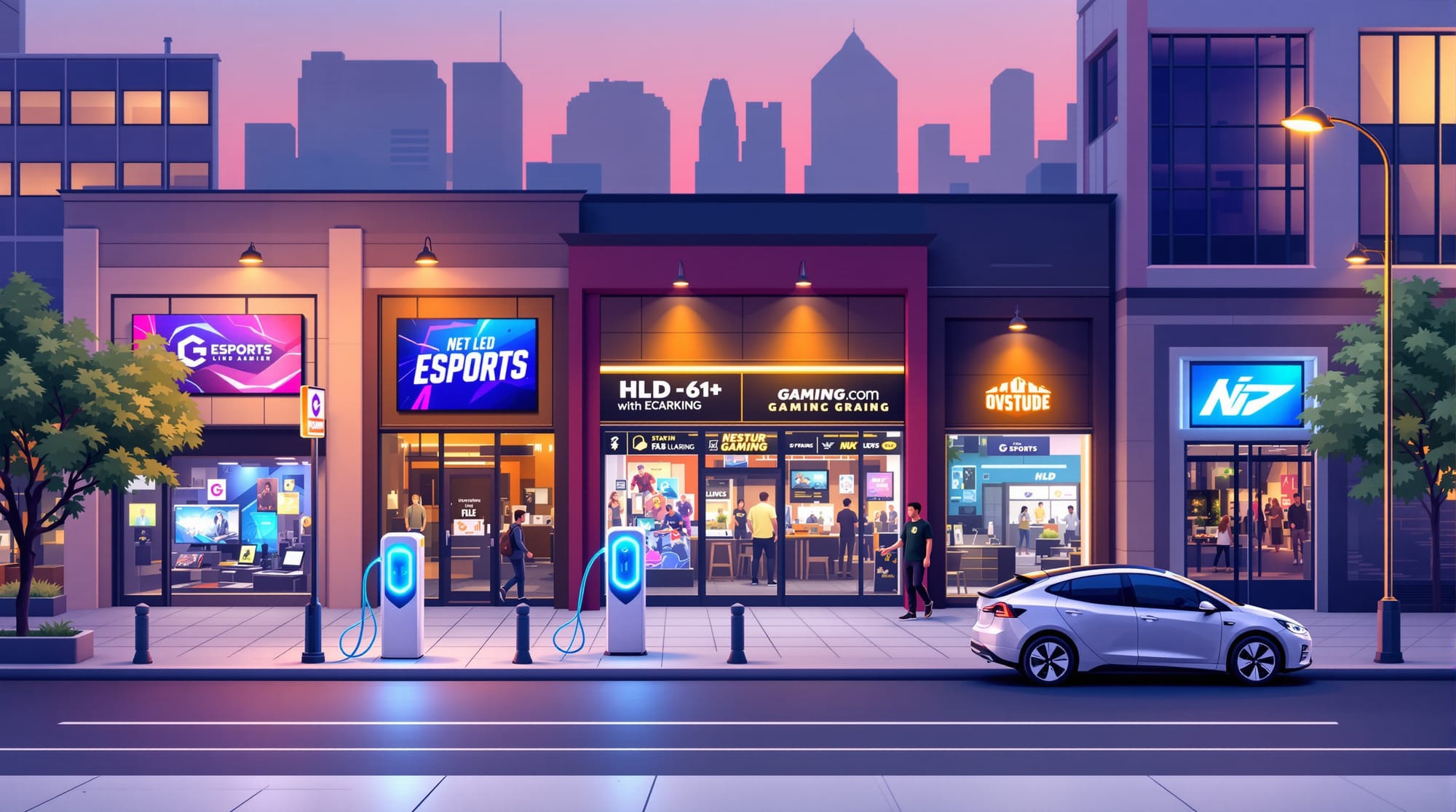
Philadelphia's commitment to install 1,000 curbside electric vehicle chargers represents more than an infrastructure milestone—it's a wake-up call for the gaming and esports industry about how physical spaces will be accessed and sustained in the coming decade. While environmental advocates celebrate the equity implications of neighborhood-level charging, the gaming community should be asking a harder question: what does this shift mean for esports venues, gaming cafes, and tournament infrastructure in dense urban areas?
The numbers tell a straightforward story. A city of 1.6 million people adopting widespread curbside charging means tens of thousands of commuters, fans, and esports professionals will arrive at entertainment venues via electric vehicles rather than traditional combustion engines. That's not trivial. It's a logistical, economic, and operational reality that venue operators—from boutique gaming lounges to large-scale esports arenas—need to architect for today, not tomorrow.
Consider the immediate operational challenge. A venue operator in Center City or University City who currently plans parking, loading, and foot traffic patterns based on internal combustion vehicle behavior is working with obsolete assumptions. EV drivers have different patterns. They're not rushing in and out; they're charging for 20 minutes to an hour. That changes pedestrian flow, dwell time, and the entire customer journey. An esports stadium hosting a major Counter-Strike or League of Legends tournament can't afford operational chaos when thousands of attendees arrive simultaneously and face unfamiliar charging infrastructure they don't understand. Venue managers need to partner with charging networks now—not after opening day disasters reveal gaps in planning.
Beyond logistics, there's an underexplored sustainability narrative that actually matters to the gaming audience. The esports and gaming community is disproportionately young, urban, and—despite stereotypes—increasingly conscious about environmental footprint. A professional esports organization that markets itself as forward-thinking but operates venues with zero EV charging infrastructure or public transit coordination sends a muddled message. Epic Games, Riot Games, and esports teams looking to build authentic community presence in cities like Philadelphia have a genuine opportunity to align venue infrastructure with the transportation choices their fans are actually making. It's not performative—it's competitive advantage disguised as responsibility.
There's also an economic angle that deserves scrutiny. Gaming venues and esports stadiums represent significant real estate investment in urban cores. Property values, zoning permissions, and municipal goodwill all flow from demonstrated alignment with city planning priorities. Philadelphia's aggressive EV charging deployment isn't happening in isolation—it reflects broader municipal infrastructure strategy. Venue operators who position themselves as partners in that vision rather than obstacles to it will find permitting processes smoother, expansion easier, and community support stronger. Conversely, a large esports arena that ignores charging infrastructure while the city deploys 1,000 curbside stations around it looks anachronistic within five years.
The technical piece is manageable but requires proactive engagement. Gaming venues need to collaborate with charging networks—whether EVgo, Electrify America, or municipal programs—to understand load capacity, payment integration, and wayfinding. A major tournament venue needs redundancy; if a charging station goes down, it shouldn't cascade into parking chaos. This isn't novel engineering. It's the same infrastructure planning that successful venues already do for internet bandwidth, power distribution, and emergency access. EV charging is simply the next system to integrate.
What this means for the gaming industry isn't a burden—it's a design opportunity. Philadelphia's curbside charging initiative gives venue operators a concrete roadmap and municipal partnership pathway. Esports organizations, gaming studios, and venue management companies that engage with city planners on EV infrastructure aren't being virtuous; they're optimizing for 2030. The fans are coming in electric vehicles. The charging is coming to the curbs. The venues that acknowledge both realities will thrive. The ones that don't will be explaining outdated parking policies while competitors capture market share and municipal favor.
Written by the editorial team — independent journalism powered by Pressnow.
Sources: Electrek · May 4, 2026