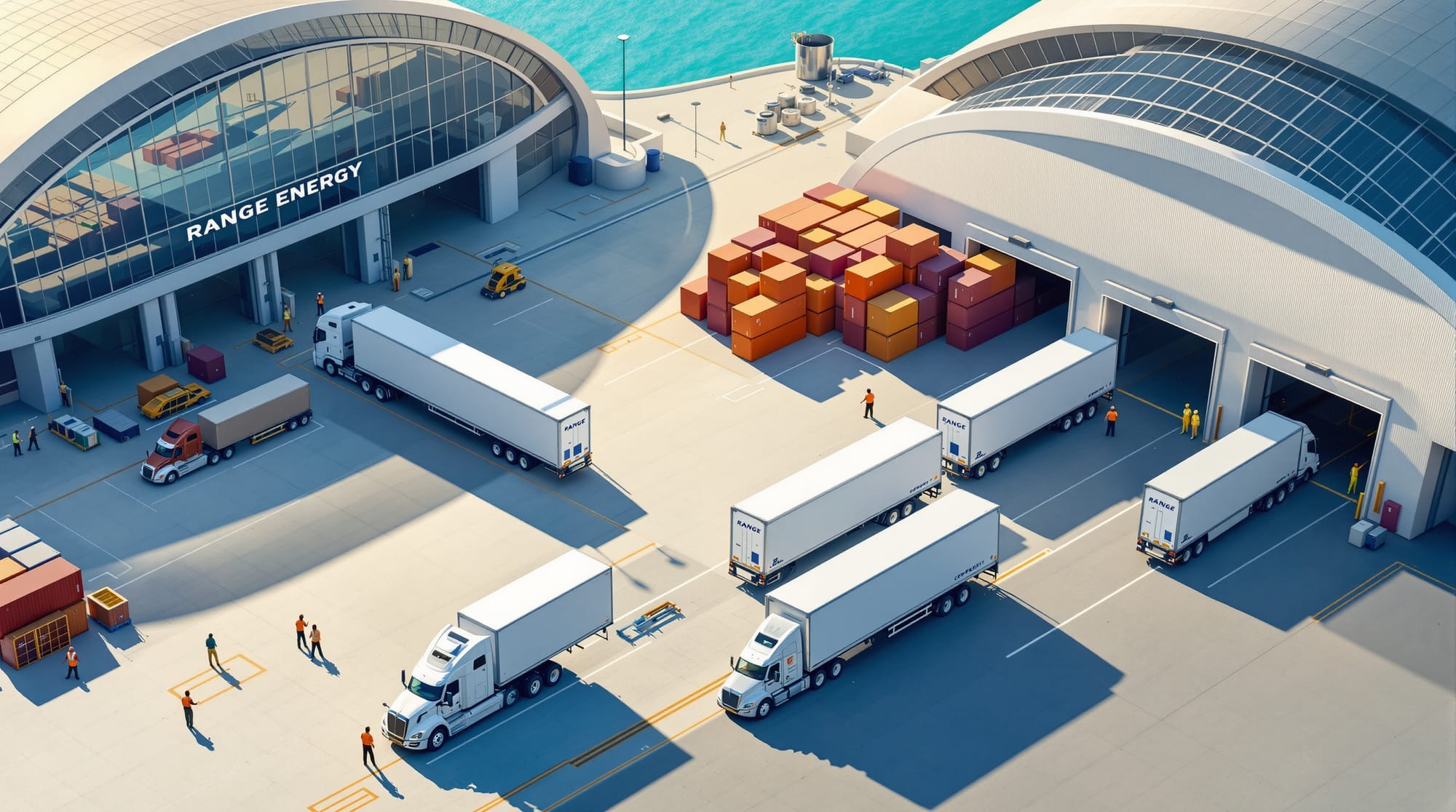
The trucking industry's electrification challenge just got a creative solution that sidesteps one of logistics operators' biggest concerns: fleet replacement costs. At ACT Expo 2026, Range Energy demonstrated how their electric trailer technology could revolutionize freight efficiency without forcing companies to abandon their existing truck investments.
Speaking with Collin MacGregor, Range Energy's Vice President of Product, the company's approach becomes clear: rather than requiring operators to purchase entirely new electric tractors, their system integrates electrification at the trailer level. This strategy addresses a fundamental barrier that has slowed commercial vehicle electrification—the massive capital expenditure required to replace entire fleets with electric alternatives.
The implications extend far beyond simple cost savings. MacGregor outlined how these electric trailers can actively support grid infrastructure, essentially turning freight operations into mobile energy resources. This dual functionality transforms logistics companies from pure energy consumers into potential grid stabilization partners, a capability that could unlock new revenue streams while supporting renewable energy integration.
For an industry built on razor-thin margins, the trailer-based approach offers compelling economics. Freight operators can maintain their existing diesel and gas tractors while immediately capturing efficiency gains from electrified cargo hauling. This hybrid strategy eliminates the binary choice between full electrification and status quo operations, creating a practical transition path that respects both environmental goals and business realities.
Grid Integration Creates New Possibilities
The grid support capabilities represent perhaps the most intriguing aspect of Range Energy's system. As renewable energy sources create increasingly variable power generation, mobile storage solutions become critical for grid stability. Electric trailers spending hours at loading docks could serve as distributed energy resources, storing excess renewable capacity during peak production and feeding power back during high-demand periods.
This vehicle-to-grid functionality positions logistics companies as infrastructure partners rather than simple service providers. The economic model shifts from pure transportation costs to a more complex calculation that includes potential grid services revenue, fundamentally altering how operators evaluate equipment investments.
The timing appears strategic, with commercial electrification mandates advancing across multiple states and federal infrastructure spending supporting charging network expansion. Range Energy's trailer-centric approach allows operators to begin capturing benefits from these policy shifts without waiting for electric truck technology to mature or charging infrastructure to achieve full coverage.
Industry Transformation Through Incremental Innovation
ACT Expo has historically showcased evolutionary rather than revolutionary transportation technologies, making Range Energy's presence particularly significant. The trade show environment provides direct access to fleet managers, logistics executives, and equipment buyers who ultimately determine adoption rates for new technologies.
MacGregor's emphasis on maintaining existing truck fleets reflects deep industry knowledge. Logistics companies have invested billions in current equipment, with many tractors designed for decades of service life. Electric trailer technology respects these investments while providing a pathway toward operational improvements and regulatory compliance.
The broader freight industry faces mounting pressure from both environmental regulations and customer sustainability demands. Major retailers and manufacturers increasingly require carbon footprint reporting from their logistics partners, creating market incentives for efficiency improvements. Range Energy's solution addresses these requirements without forcing the operational disruptions associated with complete fleet replacement.
This approach could accelerate commercial vehicle electrification by removing adoption barriers that have limited previous technologies. Rather than requiring operators to bet everything on electric truck reliability and charging infrastructure availability, trailer-based systems offer measurable benefits with manageable risks. The result may be faster industry transformation through incremental rather than wholesale change.
Written by the editorial team — independent journalism powered by Pressnow.
Sources: Electrek · May 8, 2026