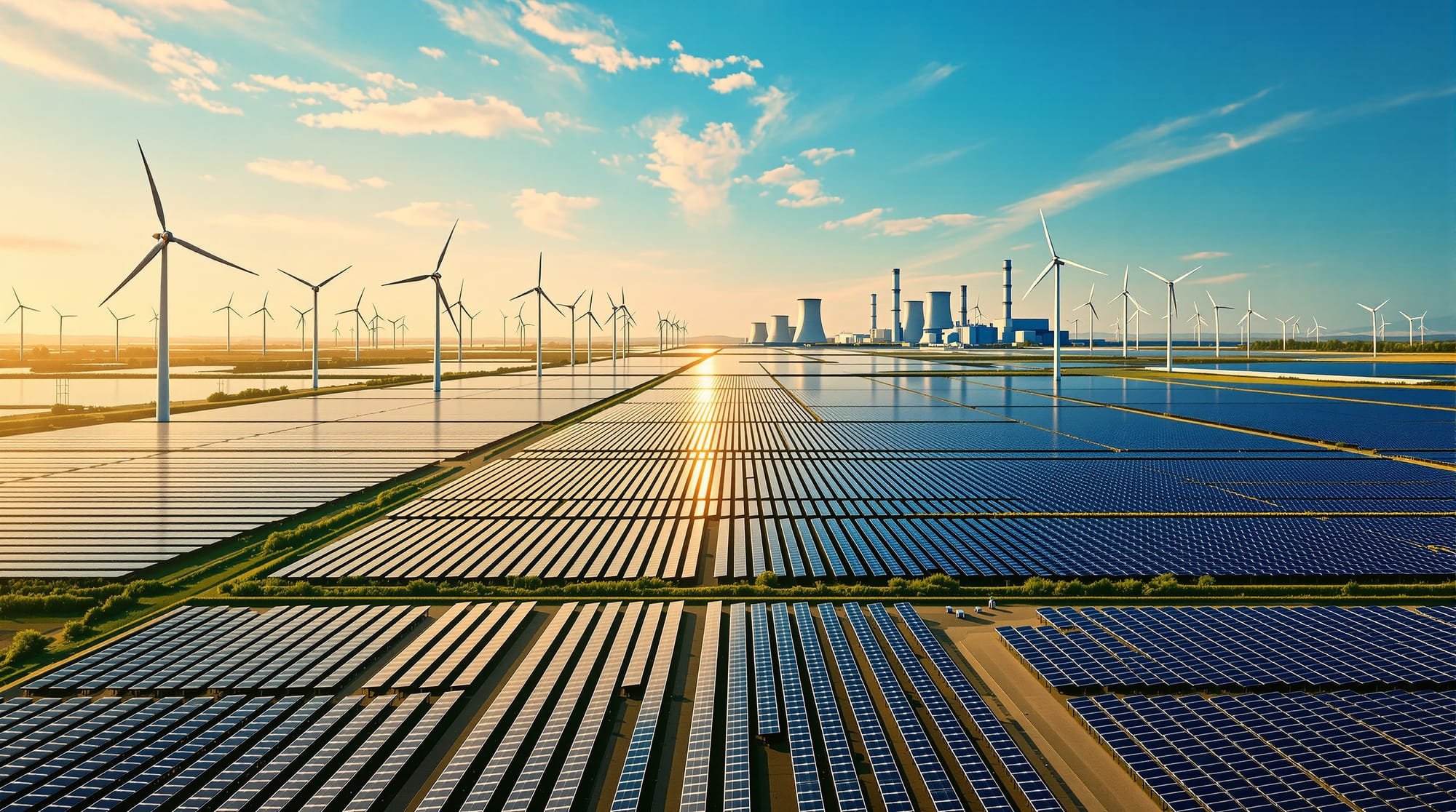
The global energy landscape has reached a defining moment that will likely be remembered as the tipping point in humanity's transition away from fossil fuels. For the first time in modern history, wind and solar power combined to generate more electricity than natural gas on a global scale throughout an entire month, achieving this historic milestone in April 2026.
This unprecedented achievement represents far more than a statistical curiosity—it signals a fundamental shift in how the world powers itself. The renewable energy sector has spent decades building toward this moment, overcoming technological barriers, cost challenges, and infrastructure limitations that once made such an outcome seem like a distant dream. The fact that wind and solar have now definitively outproduced one of the world's most dominant energy sources marks a watershed moment for the clean energy transition.
The implications for the gaming and technology industries are particularly significant. Data centers that power cloud gaming services, cryptocurrency mining operations, and the massive server farms supporting online multiplayer experiences have historically been among the largest consumers of electricity globally. Microsoft, Google, and Amazon Web Services have all made substantial commitments to renewable energy, and this milestone suggests their sustainability goals are becoming increasingly achievable at scale.
The achievement also comes at a crucial time for the gaming industry's environmental consciousness. As hardware becomes more powerful and energy-intensive—from graphics cards pushing 4K gaming at high frame rates to the emergence of AI-powered game development tools—the source of that electricity matters more than ever. The gaming community has increasingly demanded that their favorite platforms and publishers take environmental responsibility seriously, and this renewable energy milestone provides a clearer pathway toward truly sustainable gaming ecosystems.
What makes April 2026's achievement particularly remarkable is its timing within the broader energy transition narrative. Just five years ago, many energy experts predicted that renewable sources would need at least another decade to consistently outpace fossil fuels in monthly generation totals. The acceleration has been driven by unprecedented cost reductions in both wind and solar technologies, coupled with massive infrastructure investments across multiple continents.
The gaming industry's appetite for computing power has historically been criticized for its environmental impact, particularly in areas like cryptocurrency gaming and NFT marketplaces that require energy-intensive blockchain operations. However, this renewable energy milestone suggests that the industry's growth and environmental responsibility need not be mutually exclusive. Companies developing the metaverse, virtual reality experiences, and AI-driven gaming features can now point to an electricity grid that increasingly runs on clean energy.
Looking ahead, this achievement likely represents just the beginning of renewable energy dominance rather than an isolated monthly anomaly. The infrastructure investments and technological improvements that enabled April 2026's milestone continue accelerating, while natural gas capacity additions have slowed globally. For technology companies planning long-term data center strategies and gaming platforms considering their carbon footprints, the trajectory appears increasingly clear.
The milestone also arrives as next-generation gaming consoles and PC graphics cards demand more sophisticated power management and efficiency features. Hardware manufacturers who have traditionally focused primarily on performance metrics are now integrating sustainability considerations into their design philosophies, knowing that the electricity powering their devices comes increasingly from renewable sources.
April 2026 will likely be remembered as the month when renewable energy transitioned from an aspirational goal to the dominant reality of global electricity generation. For an industry that thrives on technological innovation and forward-thinking design, the gaming and esports ecosystem now operates in a world where clean energy isn't just possible—it's happening at unprecedented scale.
Written by the editorial team — independent journalism powered by Pressnow.
Sources: Electrek · Wed, 20 May 2026