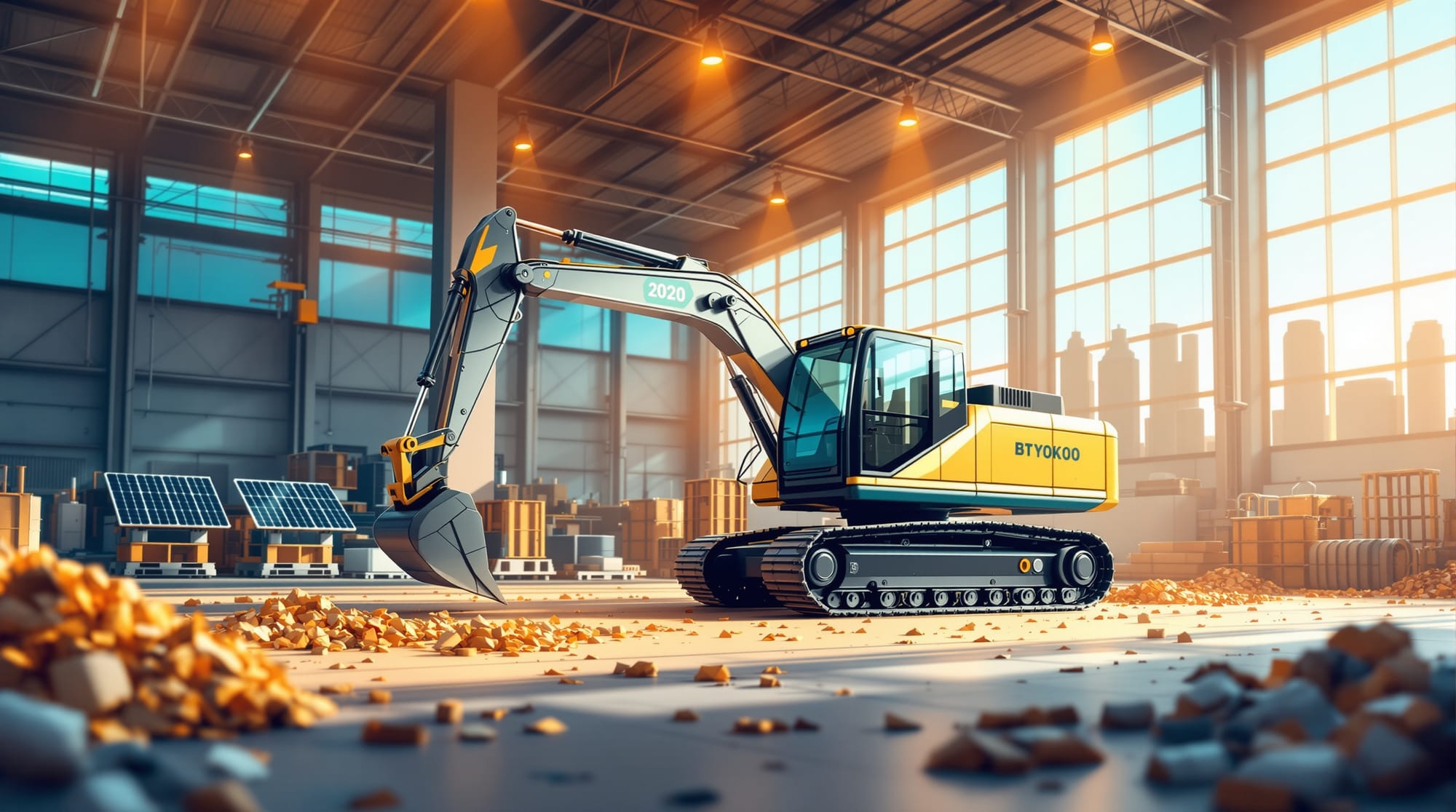
The convergence of gaming technology and heavy industry reaches another milestone as German equipment manufacturer Sennebogen unveiled its semi-autonomous material handling system, showcasing how automation principles pioneered in gaming environments are revolutionizing real-world industrial applications. The demonstration of this electric, semi-autonomous solution signals a broader shift toward intelligent automation that gaming and esports audiences will recognize from their virtual worlds.
Sennebogen's integrated system combines three core components: an electric wheeled excavator, a mobile battery unit, and a mobile shredder designed specifically for European recycling operations. This configuration represents more than incremental improvement—it embodies the same systematic thinking that drives modern game development, where multiple interconnected systems must operate seamlessly to deliver optimal performance. The focus on European recycling plants reflects the region's aggressive sustainability mandates and advanced regulatory framework that increasingly demands both environmental compliance and operational efficiency.
The semi-autonomous nature of Sennebogen's solution mirrors the hybrid human-AI cooperation models that define contemporary competitive gaming. Rather than pursuing full automation that removes human operators entirely, the system enhances human decision-making while handling routine operational tasks independently. This approach acknowledges the complexity of real-world industrial environments, where unpredictable variables require human judgment while repetitive precision tasks benefit from automated execution.
For the gaming and esports community, this development illuminates how technologies incubated in virtual environments increasingly shape physical industries. The sensor arrays, machine learning algorithms, and real-time decision-making systems that enable Sennebogen's autonomous operations share fundamental architecture with the AI systems powering modern game engines and esports analytics platforms. The crossover extends beyond surface similarities—both domains require millisecond response times, predictive modeling, and adaptive learning capabilities that respond to changing environmental conditions.
The European recycling sector's embrace of this technology demonstrates how regulatory pressure can accelerate innovation adoption. As sustainability requirements tighten across the continent, recycling facilities face mounting pressure to increase throughput while reducing energy consumption and operational costs. Sennebogen's electric powertrain addresses environmental mandates while the autonomous features target productivity requirements—a dual approach that gaming companies employ when balancing performance optimization with resource constraints in competitive titles.
The modular design philosophy underlying this material handling system reflects contemporary game development practices where scalable, interconnected components enable rapid iteration and customization. The mobile battery unit provides operational flexibility that mirrors how modern gaming hardware emphasizes portable power solutions, while the integrated shredder component ensures that the system delivers complete workflow solutions rather than isolated tools. This comprehensive approach positions the technology for broader adoption across industrial applications beyond recycling.
The timing of this demonstration coincides with broader industrial transformation accelerating across European markets, where companies increasingly view automation as essential for maintaining competitive positioning. The gaming industry's experience with rapid technological adoption and complex system integration provides valuable insights for understanding how these industrial automation trends will unfold. Gaming companies that have navigated the transition from manual processes to AI-assisted operations can recognize the strategic implications as traditional industries undergo similar transformations.
This convergence between gaming technology and industrial applications represents more than technological curiosity—it signals emerging opportunities for cross-sector innovation and talent migration. As industrial automation systems become more sophisticated, they increasingly require the same skills that drive gaming and esports development: real-time data processing, predictive analytics, and user experience optimization. The professionals who understand these systems in gaming contexts are well-positioned to contribute to industrial automation advances.
Sennebogen's achievement demonstrates how the boundary between virtual and physical automation continues to blur, creating new possibilities for innovation and efficiency across industries. As gaming technology matures and industrial sectors embrace intelligent automation, these intersections will likely accelerate, offering gaming and esports professionals new avenues for applying their expertise while advancing technological progress across multiple domains.
Written by the editorial team — independent journalism powered by Pressnow.
Sources: Electrek · May 16, 2026