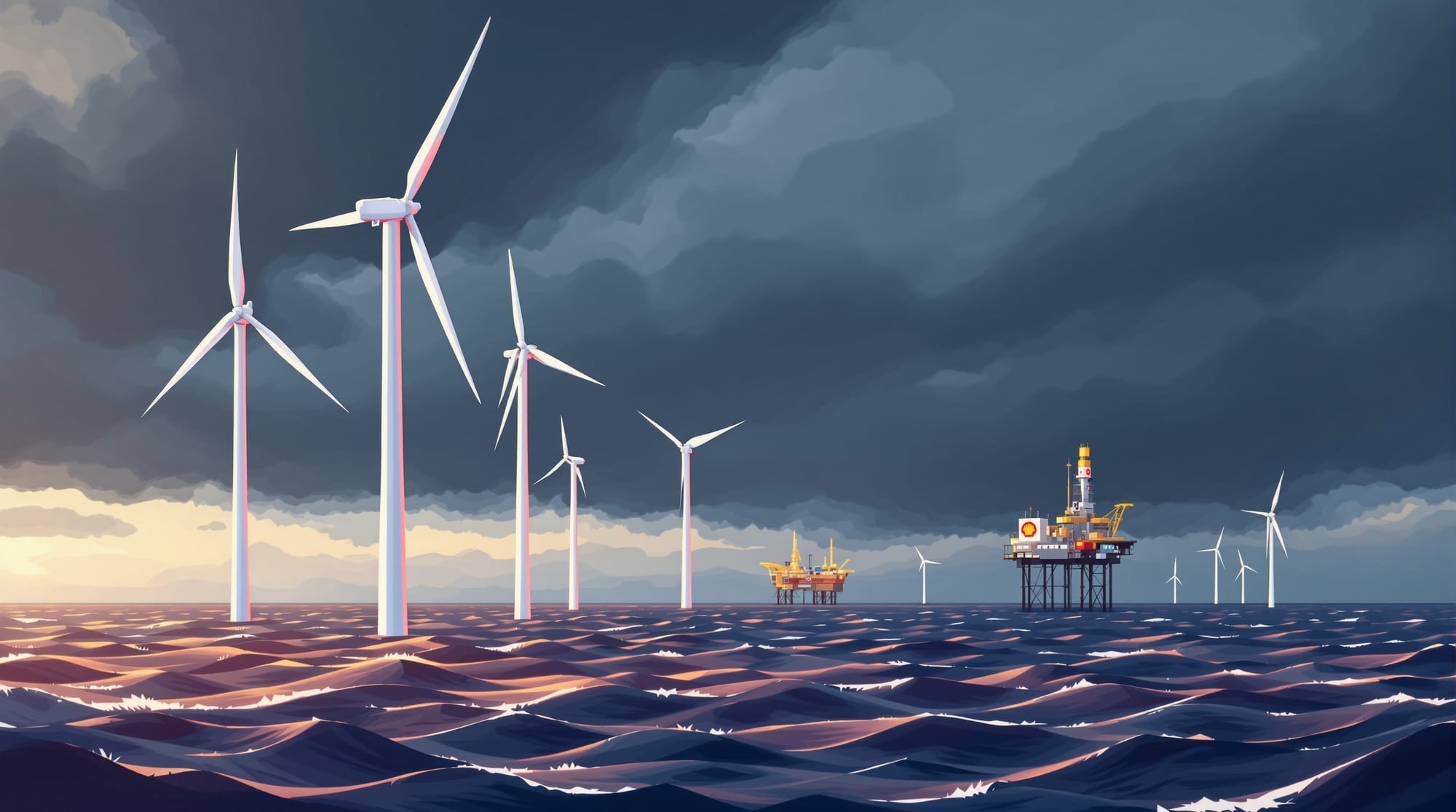
The energy transition has claimed another major corporate casualty, as Shell prepares to offload its offshore wind portfolio in what Bloomberg reports could be a deal worth more than $1 billion. The move represents the oil giant's most significant retreat yet from renewable energy investments, signaling a fundamental strategic pivot that could reshape how traditional energy companies approach the clean power revolution.
Shell's planned divestment of its offshore wind farm assets marks the latest in a series of renewables exits by the Anglo-Dutch energy company, suggesting that the much-heralded convergence between fossil fuels and clean energy may be proving more challenging than industry leaders initially anticipated. The billion-dollar asset sale would effectively end Shell's direct participation in what many consider the most promising sector of the renewable energy landscape.
The offshore wind industry has experienced explosive growth over the past decade, driven by rapidly declining costs, improved technology, and aggressive government targets for clean energy deployment. Major economies from the United States to the United Kingdom have committed hundreds of billions in offshore wind development, creating what appeared to be an irresistible investment opportunity for energy majors seeking to diversify their portfolios ahead of the global energy transition.
Shell's decision to walk away from this booming sector raises fundamental questions about the economic viability of traditional energy companies' renewable strategies. Unlike onshore wind or solar projects, offshore wind requires massive upfront capital investments, complex engineering capabilities, and long-term commitments that may not align with the quarterly earnings pressures facing publicly traded oil companies. The technical expertise needed to develop offshore wind farms—while related to offshore oil and gas operations—represents a distinct skillset that requires years to develop and significant ongoing investment to maintain competitiveness.
The timing of Shell's exit is particularly noteworthy, coming as governments worldwide accelerate offshore wind deployment targets and auction substantial lease areas for development. The Biden administration has set ambitious goals for offshore wind capacity, while European nations continue expanding their already substantial offshore wind portfolios. This policy support has attracted intense interest from infrastructure investors, pension funds, and dedicated renewable energy companies that may be better positioned to capitalize on the sector's long-term growth potential.
For Shell, the offshore wind divestment likely reflects a broader strategic recalibration toward higher-margin, shorter-payback investments that can generate more immediate returns for shareholders. Traditional oil and gas operations, despite their environmental challenges, offer more predictable cash flows and leverage the company's existing operational expertise. The billion-dollar asset sale could provide significant capital that Shell might redeploy toward more profitable ventures or return to shareholders through dividends and buybacks.
The broader implications for the energy transition are significant. Shell's retreat from offshore wind demonstrates that the clean energy revolution may increasingly be driven by specialized renewable energy companies, utilities, and infrastructure investors rather than diversified energy majors. This trend could accelerate the industry's evolution toward more focused, technology-specific players who can achieve economies of scale and operational excellence within narrower market segments.
Shell's offshore wind exit also highlights the complex financial realities facing energy companies navigating the transition to clean power. While renewable energy offers tremendous long-term growth potential, the capital requirements, development timelines, and risk profiles may not align with the business models that made traditional energy companies successful in the hydrocarbon era. As Shell prepares to finalize this billion-dollar divestment, the energy industry will be watching closely to see whether other majors follow suit or double down on their renewable commitments.
Written by the editorial team — independent journalism powered by Pressnow.
Sources: Electrek · Fri, 12 Jun 2026