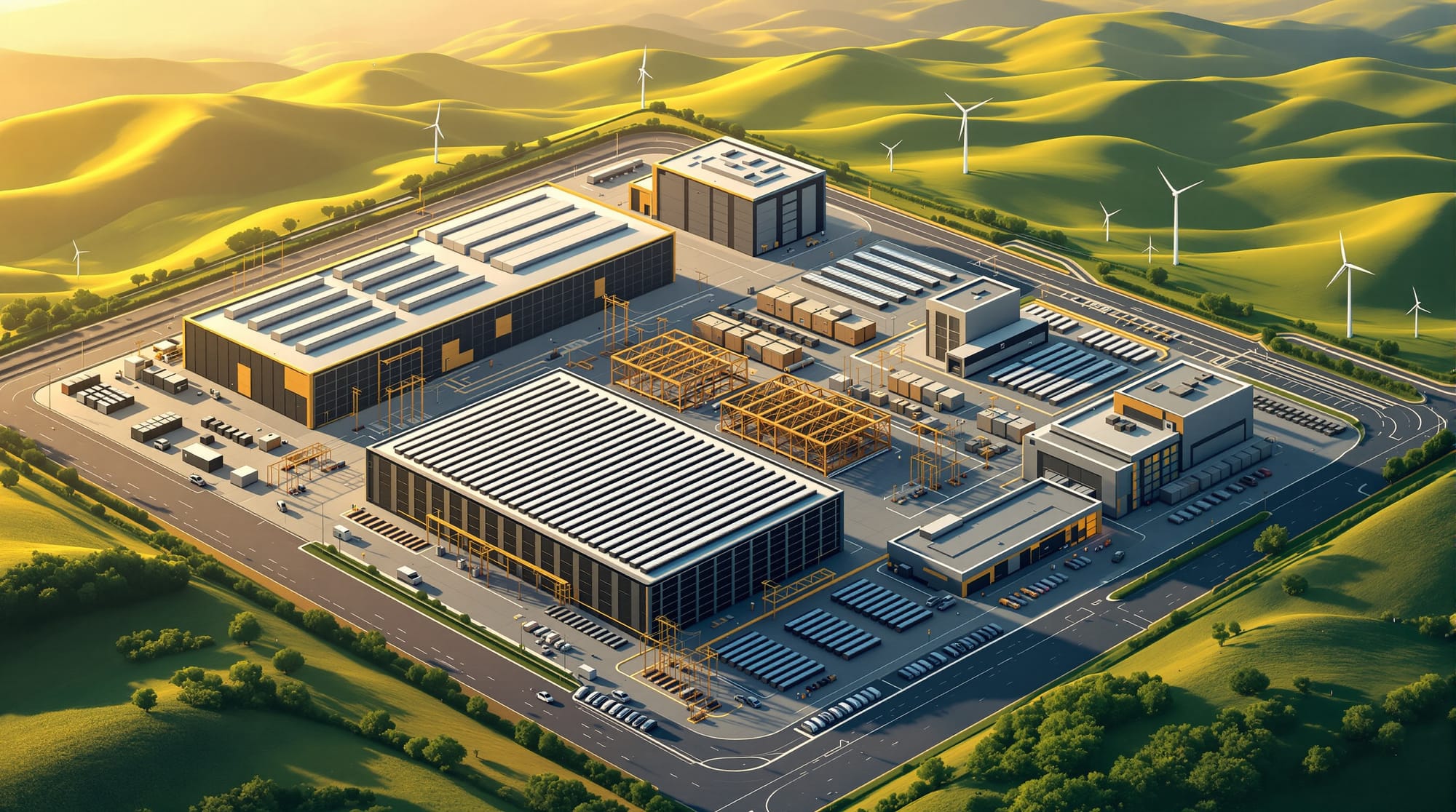
The artificial intelligence revolution isn't just transforming software—it's reshaping the entire energy infrastructure that powers our digital future. T1 Energy, the Norwegian battery company formerly known as FREYR Battery, just made a decisive move to position itself at the center of this transformation with its acquisition of battery storage and software specialist KORE Power. This strategic deal represents more than a simple corporate expansion; it's a calculated bet on the explosive growth of AI-driven data center demand that's already straining global power grids.
The timing couldn't be more critical. As artificial intelligence workloads proliferate across industries, data centers are consuming unprecedented amounts of electricity while simultaneously demanding rock-solid power reliability. Traditional grid infrastructure wasn't designed for the massive, consistent power draws that modern AI training clusters require. When a single AI model training run can consume megawatts of power for weeks or months, any interruption translates directly to millions in lost computational work and delayed product launches.
T1 Energy's acquisition of KORE Power creates a vertically integrated powerhouse capable of addressing these exact challenges. Where T1 Energy brings proven battery manufacturing capabilities and Norwegian engineering expertise, KORE Power contributes sophisticated energy management software and deep experience in industrial-scale storage deployments. The combination promises to deliver turnkey solutions that can handle both the capacity and reliability demands of next-generation AI infrastructure.
This merger reflects broader market dynamics that extend far beyond any single corporate transaction. Hyperscale cloud providers like Microsoft, Google, and Amazon are racing to secure reliable power sources for their AI ambitions, often finding themselves constrained by grid capacity rather than computing hardware availability. The result has been a fundamental shift in how tech companies approach infrastructure planning, with power considerations now driving facility location decisions that once focused purely on connectivity and real estate costs.
The energy storage sector has responded to this opportunity with unprecedented investment and innovation. Battery technologies that once seemed economically viable only for niche applications are suddenly essential components of mainstream data center design. Grid-scale storage systems that can smooth power delivery, provide backup capacity, and even enable off-grid operations are transitioning from experimental installations to core infrastructure requirements.
For T1 Energy, this acquisition represents a strategic pivot from pure battery manufacturing toward comprehensive energy solutions. The company's Norwegian heritage provides advantages in both clean energy expertise and access to abundant hydroelectric power, positioning it well for sustainability-conscious AI companies. Meanwhile, KORE Power's software capabilities add crucial intelligence layers that can optimize energy usage patterns, predict maintenance needs, and integrate with broader facility management systems.
The broader implications extend throughout the gaming and esports ecosystem, where AI-powered experiences increasingly drive computational demands. Real-time ray tracing, procedural content generation, and adaptive gameplay systems all rely on data center resources that must be powered reliably and efficiently. As game developers push toward more sophisticated AI implementations, the infrastructure supporting these experiences becomes increasingly critical to delivering consistent player experiences.
Looking ahead, the T1 Energy-KORE Power combination positions the merged entity to capitalize on what industry analysts expect will be sustained growth in AI infrastructure investment. The acquisition signals confidence that current AI development trajectories will continue demanding ever-greater computational resources, with corresponding impacts on power infrastructure requirements. For an industry where millisecond response times can determine competitive advantage, having reliable, optimized power delivery isn't just convenient—it's mission-critical for maintaining the digital experiences that define modern gaming and entertainment.
Written by the editorial team — independent journalism powered by Pressnow.
Sources: Electrek · June 5, 2026