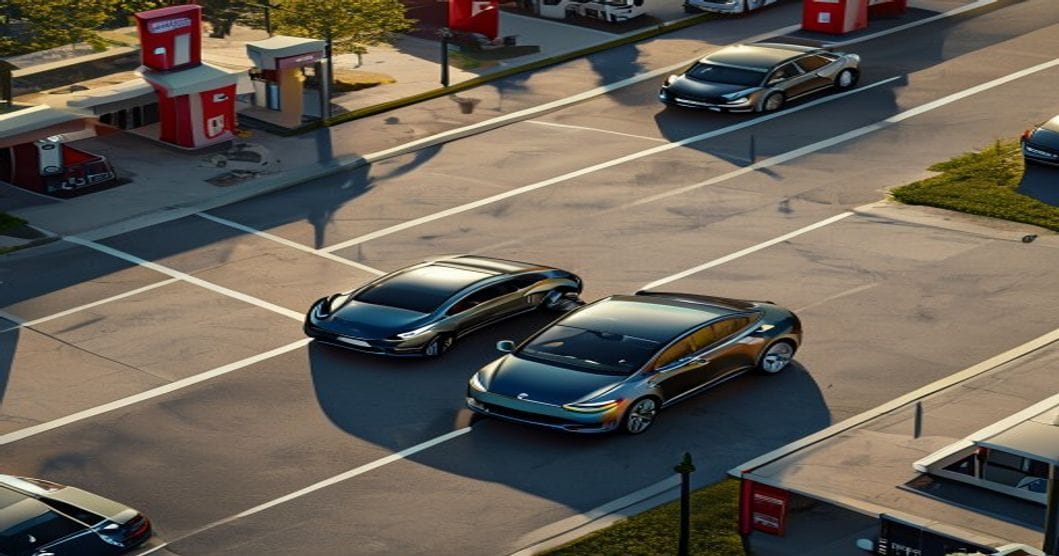
Tesla delivered its latest Full Self-Driving (FSD) update today, and the headline feature perfectly encapsulates the current state of autonomous vehicle development: Actually Smart Summon now crawls at a blistering 8 mph instead of 6 mph. While the company frames this as a 33% speed increase, the reality check hits hard when you realize we're celebrating a feature that moves slower than a determined mall walker.
The FSD V14.3.3 update, packaged as software version 2026.14.6.6, represents more than just a modest speed bump for Tesla's parking lot automation feature. For the first time, the update merges Spring 2026 software features with the FSD branch, suggesting Tesla is finally consolidating its previously fragmented software development approach. This integration could signal a more cohesive strategy for rolling out autonomous features across Tesla's ecosystem.
Actually Smart Summon, despite its confident branding, remains one of the more limited expressions of Tesla's autonomous ambitions. The feature allows owners to remotely guide their vehicle through parking lots via smartphone app, navigating around obstacles and other cars to reach the owner's location. While undeniably useful for tight parking situations or inclement weather, the glacial speeds involved underscore the conservative approach Tesla has adopted for liability-heavy autonomous features.
The Mathematics of Incremental Progress
The 33% speed increase sounds impressive until basic arithmetic deflates the achievement. Moving from 6 mph to 8 mph represents just 2 mph of additional velocity—roughly the difference between a leisurely stroll and a brisk walk. At 8 mph, summoning a Tesla from across a large parking lot still requires the patience of a meditation practitioner. The feature remains primarily useful for short-distance navigation rather than any meaningful transportation capability.
This measured approach reflects the broader challenges facing autonomous vehicle development. While Tesla's Full Self-Driving capabilities have advanced significantly in highway and city driving scenarios, parking lot navigation presents unique obstacles. The combination of pedestrians, shopping carts, tight spaces, and unpredictable human behavior creates a complex environment where even minor miscalculations can result in expensive bodywork or worse.
The speed limitation also highlights regulatory and insurance considerations that constrain autonomous features. Even as Tesla's neural networks become more sophisticated, the company must balance capability with legal liability. A parking lot fender-bender at 8 mph is an insurance claim; the same incident at 15 mph could involve personal injury lawsuits and regulatory scrutiny.
Software Integration Signals Broader Strategy
Perhaps more significant than the speed increase is Tesla's decision to merge Spring 2026 software features with the FSD branch. This consolidation suggests the company is moving away from maintaining parallel development tracks for different vehicle functions. Previously, Tesla owners often faced delays receiving general software updates while waiting for FSD compatibility, or vice versa.
The integration could accelerate the rollout of new features across Tesla's fleet while ensuring better compatibility between autonomous systems and other vehicle functions. It also indicates Tesla's growing confidence in its FSD architecture as a stable foundation for broader vehicle software operations.
This software unification comes as Tesla faces increasing competition in the autonomous vehicle space. Companies like Waymo operate fully autonomous vehicles in limited geographic areas, while traditional automakers integrate their own advanced driver assistance systems. Tesla's approach of gradual capability expansion through over-the-air updates allows for rapid iteration but also highlights the gap between marketing promises and current reality.
The Actually Smart Summon speed increase ultimately serves as a microcosm of autonomous vehicle development: meaningful progress measured in small increments rather than revolutionary breakthroughs. While 8 mph summon speeds won't reshape transportation, they represent Tesla's methodical approach to expanding autonomous capabilities within carefully controlled parameters. As the company continues refining its neural networks and accumulating real-world driving data, these incremental improvements may eventually compound into more transformative capabilities. For now, Tesla owners can enjoy the marginal convenience of slightly faster parking lot automation—and perhaps appreciate that slow and steady might actually win this particular technological race.
Written by the editorial team — independent journalism powered by Pressnow.
Sources: Electrek · May 17, 2026