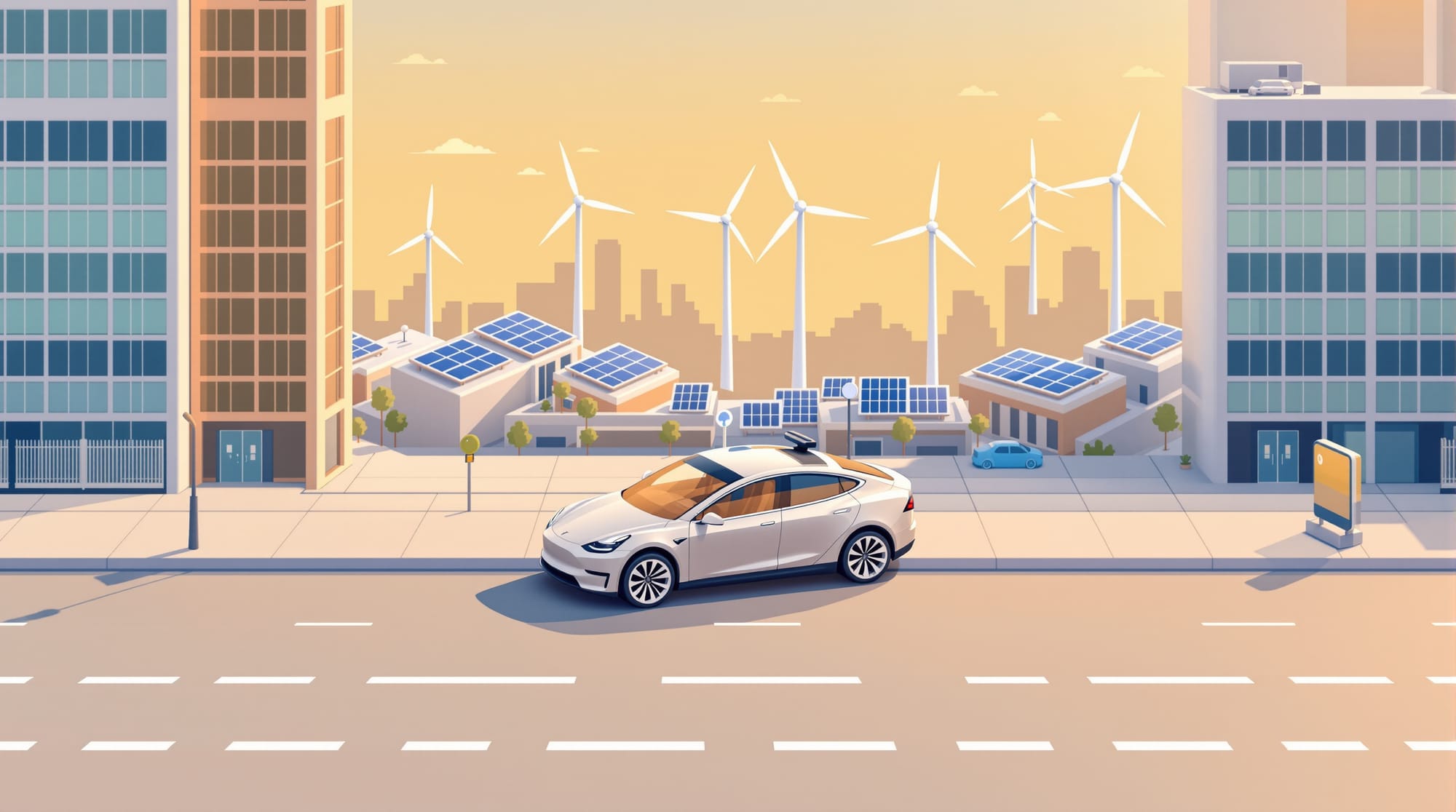
The autonomous vehicle revolution was supposed to be well underway by now, but recent developments reveal a stark divergence between ambitious promises and ground-level reality. While Tesla's much-hyped Robotaxi fleet continues to struggle with meaningful deployment, other sectors of the clean technology landscape are demonstrating genuine momentum that validates long-term investment strategies.
The contrast couldn't be more pronounced. Tesla's self-driving taxi initiative, once positioned as a cornerstone of the company's future revenue model, remains largely theoretical despite years of development and regulatory navigation. The lack of substantial progress in autonomous vehicle deployment represents more than just a technical hurdle—it signals fundamental challenges in translating laboratory capabilities to real-world commercial viability.
Meanwhile, the renewable energy sector continues its impressive trajectory across multiple fronts. Wind and solar installations in the United States are maintaining robust growth patterns, driven by improved efficiency metrics, declining costs, and supportive policy frameworks. This sustained expansion demonstrates how established clean technologies can achieve scale when market conditions align with technological maturity.
The Battery Innovation Pipeline Accelerates
Perhaps more intriguingly, solid-state battery technology is gaining significant traction in China, representing a potential paradigm shift for electric vehicle performance and manufacturing. These advanced battery systems promise enhanced energy density, faster charging capabilities, and improved safety profiles compared to current lithium-ion solutions. The geographic concentration of this development in China underscores the region's strategic focus on next-generation energy storage technologies.
The solid-state battery advancement carries implications far beyond individual vehicle performance. These systems could fundamentally alter electric vehicle economics by reducing weight, extending range, and minimizing charging infrastructure requirements. For gaming hardware manufacturers and data center operators, similar battery innovations could enable more powerful mobile devices and more efficient backup power systems.
The momentum differential between autonomous vehicles and renewable energy reflects broader patterns in technology adoption. Wind and solar technologies benefit from incremental improvements that compound over time, creating predictable scaling pathways. Autonomous vehicles, conversely, face binary regulatory and safety thresholds that create all-or-nothing deployment scenarios.
Market Reality Versus Innovation Theater
Tesla's Robotaxi struggles illuminate a common pattern in emerging technology sectors: the gap between demonstration capabilities and commercial deployment often proves wider than initial projections suggest. While Tesla has showcased impressive autonomous driving features in controlled environments, translating these capabilities into a profitable taxi service involves regulatory approval, insurance frameworks, and public acceptance—factors that resist technical solutions.
The renewable energy sector's continued growth, by contrast, demonstrates how mature technologies can maintain expansion momentum through cost optimization and policy support. Solar and wind installations benefit from established supply chains, proven reliability metrics, and clear regulatory pathways that enable predictable project development timelines.
For technology investors and industry observers, these divergent trajectories offer valuable lessons about assessing innovation claims versus market readiness. The gaming industry, with its rapid hardware evolution cycles, shares some parallels with both sectors—requiring breakthrough innovations while maintaining backward compatibility and user adoption curves.
The autonomous vehicle sector's challenges also reflect broader questions about artificial intelligence deployment in safety-critical applications. While AI systems excel in controlled gaming environments and data analysis tasks, real-world deployment scenarios introduce variables that resist algorithmic solutions. The gap between Tesla's autonomous vehicle promises and delivery timelines mirrors similar patterns across the broader AI landscape.
What this divergence ultimately reveals is the importance of distinguishing between technological capability and commercial viability. While Tesla's engineering teams continue advancing autonomous vehicle capabilities, the path from prototype to profitable service involves considerations beyond pure technical performance. Renewable energy technologies, having navigated many of these commercialization challenges over previous decades, now benefit from established deployment frameworks that enable sustained growth.
The solid-state battery developments in China, meanwhile, represent a middle path—emerging technology with clear commercial applications and established manufacturing pathways. These advances could reshape both automotive and consumer electronics landscapes, potentially offering gaming hardware manufacturers new possibilities for portable device design and performance optimization.
Written by the editorial team — independent journalism powered by Pressnow.
Sources: Electrek · May 27, 2026