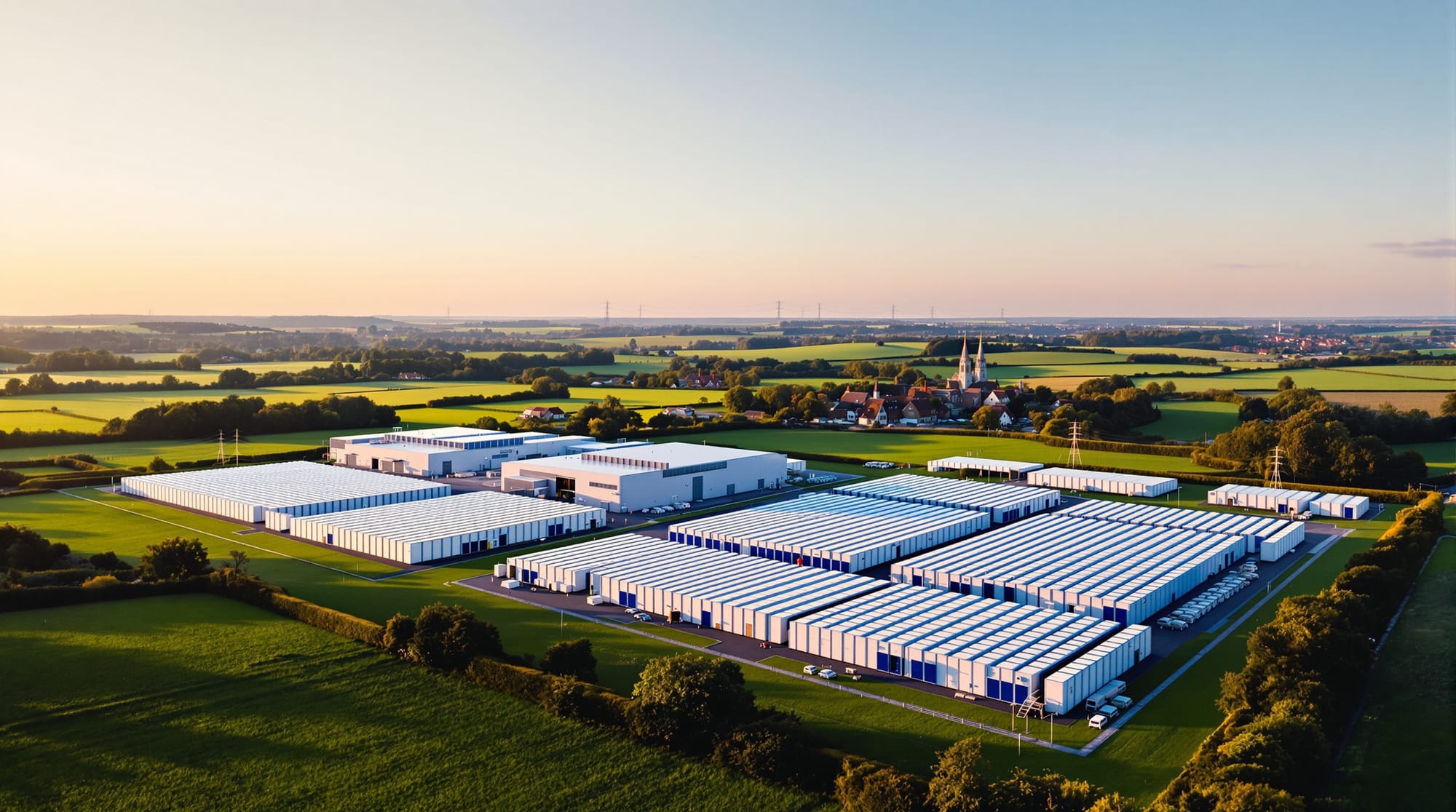
The United Kingdom has just staked its claim as Europe's energy storage leader with the completion of what will become the continent's largest vanadium flow battery installation. Invinity Energy Systems, the London-listed energy storage specialist, has successfully delivered 20.7 megawatt-hours of advanced battery technology to the Copwood VFB Energy Hub in East Sussex, marking a significant milestone in the region's push toward grid-scale renewable energy storage.
This massive deployment represents more than just impressive numbers—it signals a fundamental shift in how Europe approaches long-duration energy storage. Vanadium flow batteries offer distinct advantages over traditional lithium-ion systems, particularly in applications requiring extended discharge periods and frequent cycling without degradation. For gaming and esports infrastructure, which demands consistent, uninterrupted power delivery, this technology could prove transformative as data centers and cloud gaming platforms seek more reliable backup power solutions.
The strategic location in East Sussex places this installation at the heart of the UK's digital corridor, within striking distance of London's tech hub and the growing number of data centers that support everything from game streaming services to competitive esports tournaments. The facility's 20.7 megawatt-hour capacity represents enough stored energy to power thousands of gaming systems for hours during grid outages, or to provide crucial load balancing as renewable energy sources fluctuate throughout the day.
Invinity's achievement comes at a critical moment for the gaming industry's infrastructure needs. As cloud gaming services expand and esports events grow in scale and frequency, the demand for reliable, sustainable power sources has never been higher. Data centers supporting major gaming platforms consume enormous amounts of electricity, and any disruption can cascade through online gaming ecosystems, affecting millions of players simultaneously. The vanadium flow technology deployed at Copwood offers the kind of long-duration storage that can bridge extended periods of renewable energy intermittency.
What sets vanadium flow batteries apart from conventional energy storage is their ability to maintain capacity over thousands of charge cycles without significant degradation. Unlike lithium-ion batteries that gradually lose storage capacity, vanadium flow systems can operate for decades with minimal performance decline. This longevity makes them particularly attractive for commercial applications where consistent performance over extended periods is crucial—exactly the kind of reliability that gaming infrastructure operators demand.
The timing of this deployment aligns with broader trends in the gaming industry's sustainability initiatives. Major publishers and platform holders have committed to carbon neutrality goals, and data center operators are increasingly seeking renewable energy solutions to power their facilities. The Copwood installation, scheduled to enter full service later in 2026, will provide a blueprint for how large-scale energy storage can support the digital entertainment ecosystem while reducing reliance on fossil fuel backup power.
From a technical perspective, the 20.7 megawatt-hour capacity represents a substantial leap forward for vanadium flow battery deployments in Europe. The system's modular design allows for flexible operation, enabling the facility to provide both short-term grid stabilization services and longer-duration energy arbitrage. This versatility will be particularly valuable as the UK's electricity grid incorporates increasing amounts of variable renewable generation from wind and solar sources.
The broader implications for Europe's energy landscape cannot be overstated. As the continent works to achieve energy independence and carbon neutrality, large-scale storage installations like Copwood will play an increasingly vital role in balancing supply and demand. For the gaming industry, this infrastructure investment creates opportunities for more sustainable operations and potentially more stable electricity costs over the long term, particularly for energy-intensive applications like cryptocurrency mining for in-game economies or high-performance computing for game development.
Looking ahead, the success of Invinity's East Sussex installation will likely accelerate similar deployments across Europe. The combination of proven technology, favorable economics, and supportive policy frameworks is creating an environment where utility-scale energy storage can flourish. For gaming companies evaluating their long-term infrastructure strategies, the emergence of reliable, large-scale storage options opens new possibilities for sustainable growth without compromising on performance or reliability.
Written by the editorial team — independent journalism powered by Pressnow.
Sources: Electrek · Mon, 11 May 2026